Exhibitions
Qtopia Sydney’s galleries showcase both permanent and temporary exhibitions that honour and explore LGBTQIA+ histories. Through the presentation of contemporary artistic practice alongside historical collections and archival material, our exhibitions are curated to explore the many personal, cultural, and political stories that have shaped Australia’s queer past and continue to inform its present.
The Making of Mardi Gras
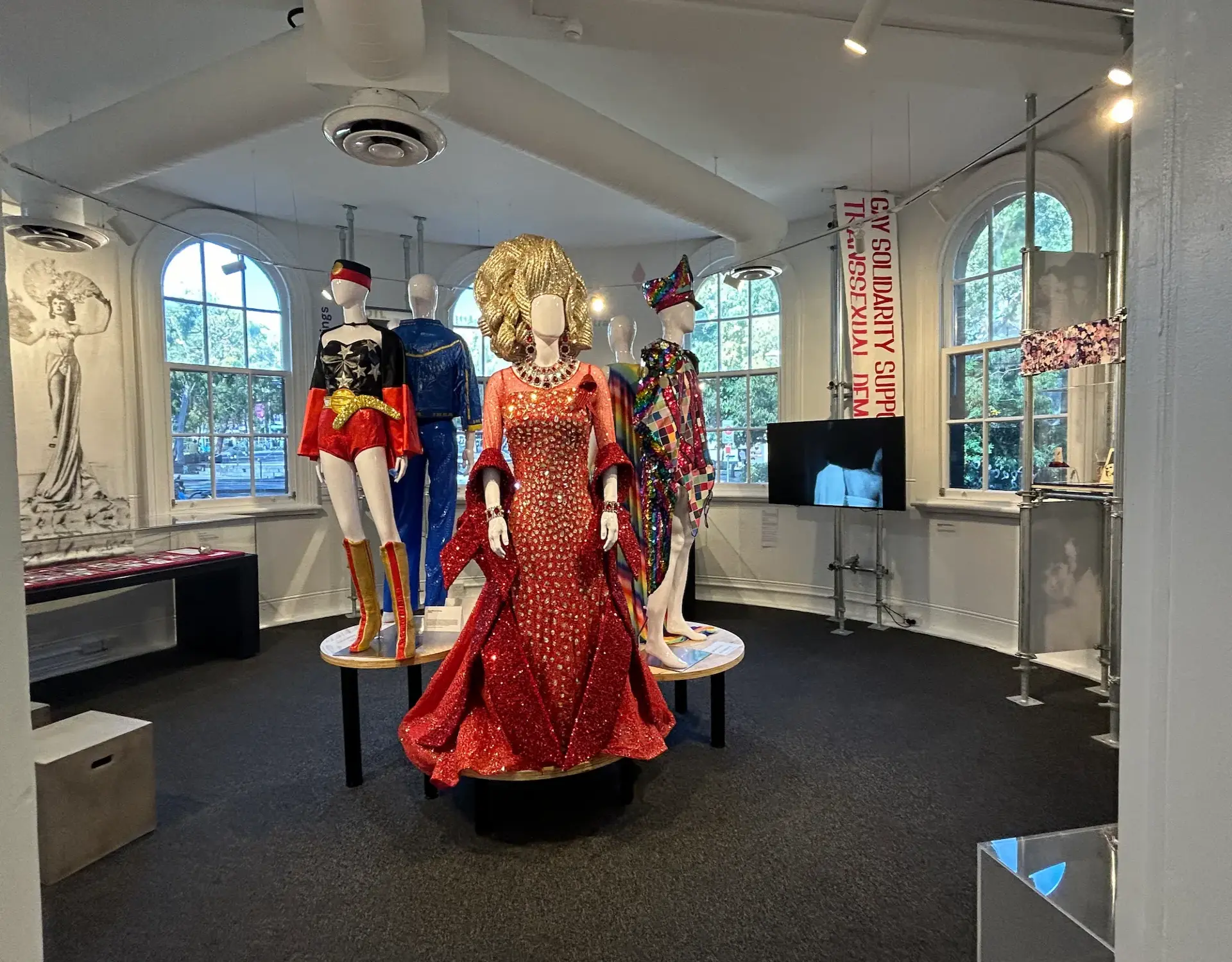
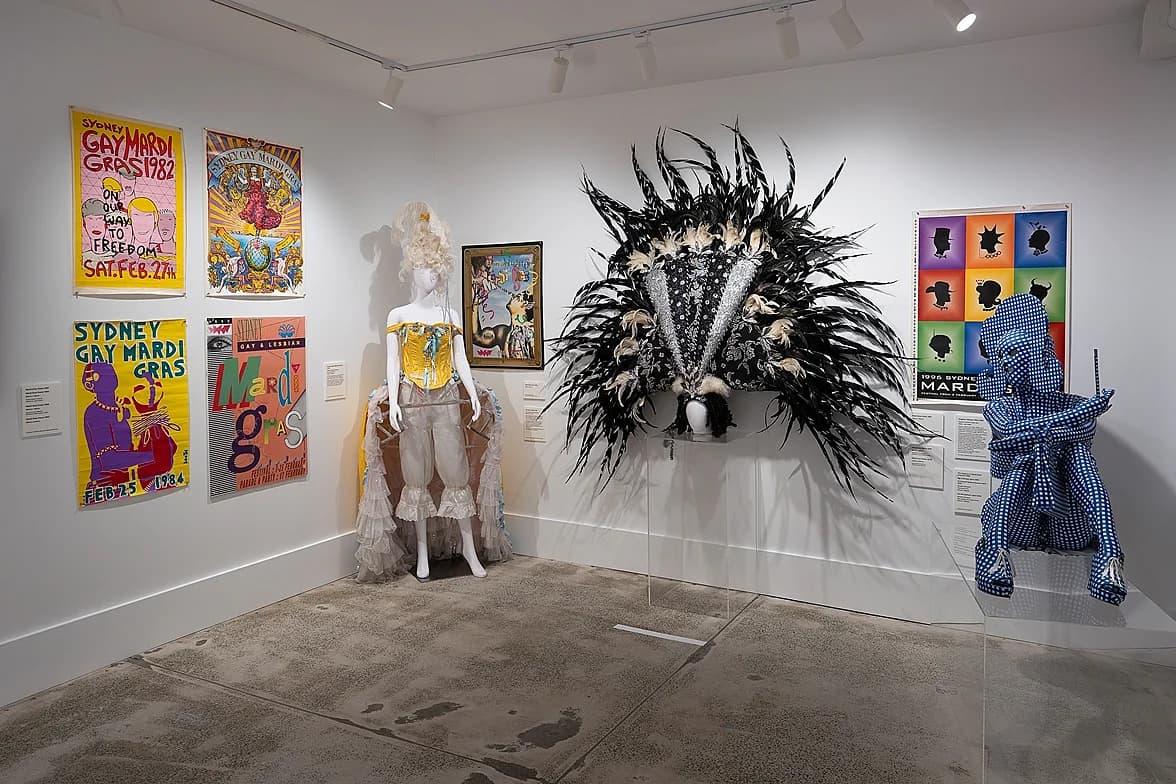
The Making of Mardi Gras celebrates the creativity, labour, and community spirit behind one of the world’s most iconic queer cultural events. Since the first protest march in 1978, Sydney Gay and Lesbian Mardi Gras has grown into a globally recognised celebration of visibility, resistance, and pride.
This exhibition brings together original Mardi Gras posters, archival footage from legendary afterparties, and a selection of notable parade costumes, offering a behind-the-scenes look at how the spectacle is made. Central to this history is the Mardi Gras Workshop, established in 1982, which provided a vital space for artists, volunteers, and community groups to design and build floats and costumes.
From the visionary aesthetics of Peter Tully to the sharp satire of David McDiarmid and Ignatius Jones, Mardi Gras has continually evolved as both artistic expression and political platform. This exhibition offers a preview of a major project planned for the 50th anniversary in 2028.
Loving
Loving, a collection of photographs of people in love has been extended to the end of September. Book now to come visit the exhibit!
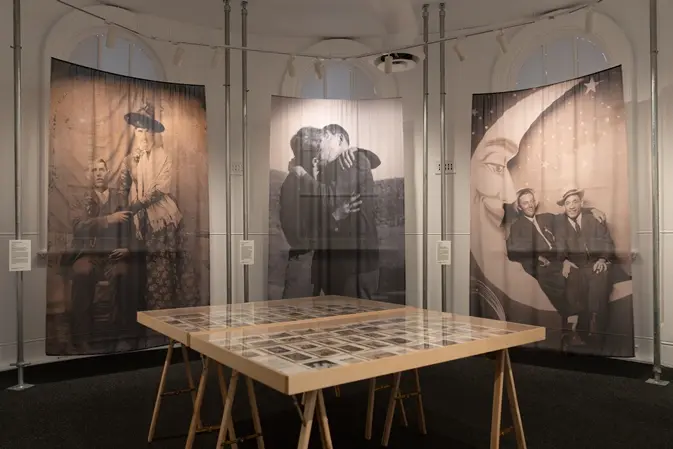
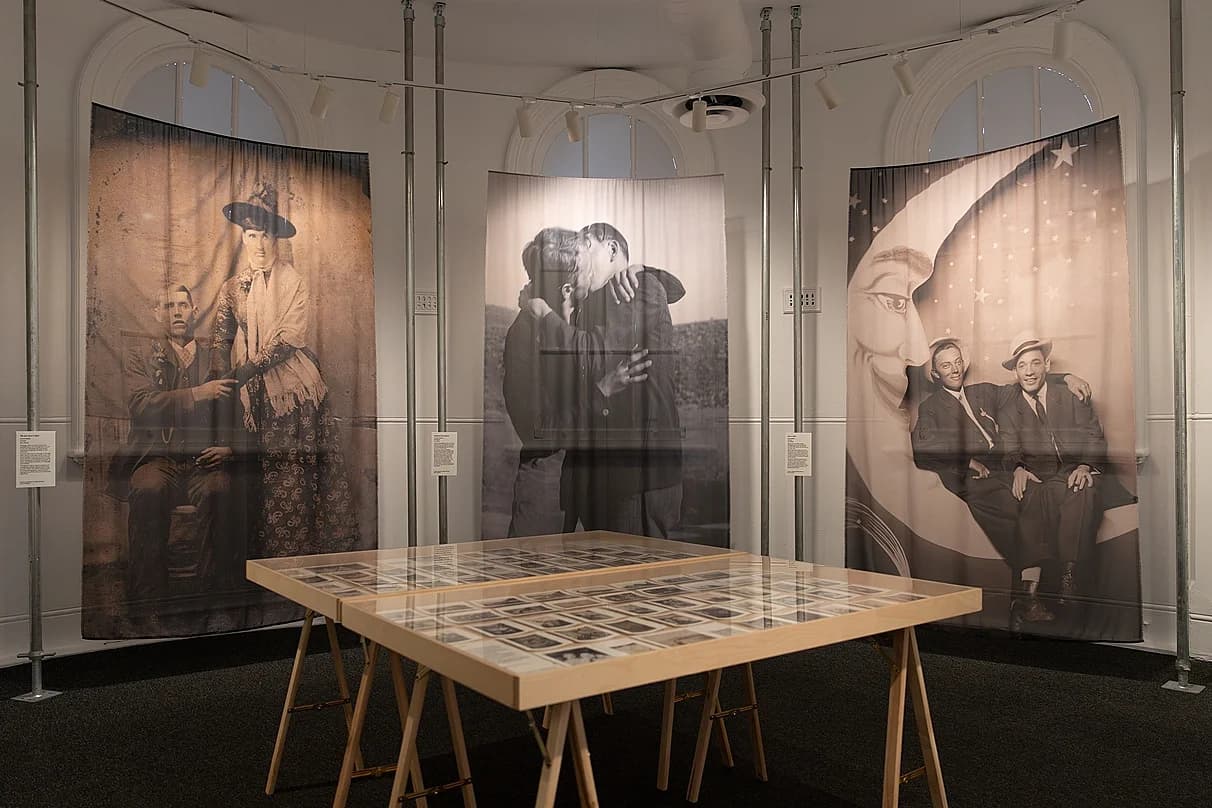
Loving presents a rare and moving archive of same-sex intimacy, drawn from the internationally significant collection of Hugh Nini and Neal Treadwell. Comprising over 4,000 photographs gathered across five continents and dating from the 1850s onward, the collection began with a single image of two men in a tender embrace discovered in a Texas antique store.
This exhibition features hundreds of photographs from the collection, including an original 19th-century photograph taken in Sydney, alongside a documentary that traces the story behind this extraordinary archive. While many images remain anonymous, details such as dress, gesture, and photographic style offer glimpses into hidden histories of love and connection.
Together, these works reveal acts of quiet courage, moments where to be seen together was itself a risk. Loving is both a recovery of the past and a testament to enduring queer presence, intimacy, and resilience.
Representation in The Media: Sydney Star Observer and Lesbians On The Loose
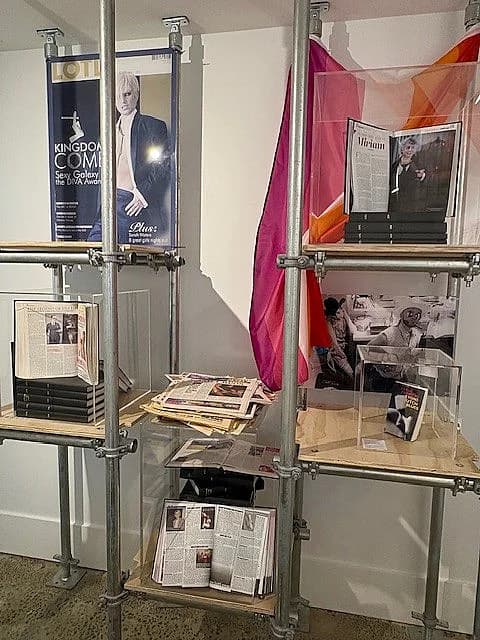
This exhibition traces the evolution of LGBTQIA+ representation in Australian media through two landmark publications: Sydney Star Observer and Lesbians On The Loose. Founded in 1979, Sydney Star Observer is one of Australia’s longest-running queer newspapers, documenting decades of activism, culture, and community life. Displayed in the exhibition are selected covers spanning over 45 years, alongside original print editions from the 1980s and 1990s, offering a powerful visual archive of shifting visibility and voice.
Lesbians On The Loose, established in 1990 as a lesbian-owned and operated publication, provides a vital counterpoint, foregrounding lesbian stories, politics, and culture often underrepresented in mainstream and even queer media. Together, these publications chart a rich history of advocacy, identity, and representation, revealing how print media has shaped, and been shaped by, Australia’s LGBTQIA+ communities.
40 Years of ACON
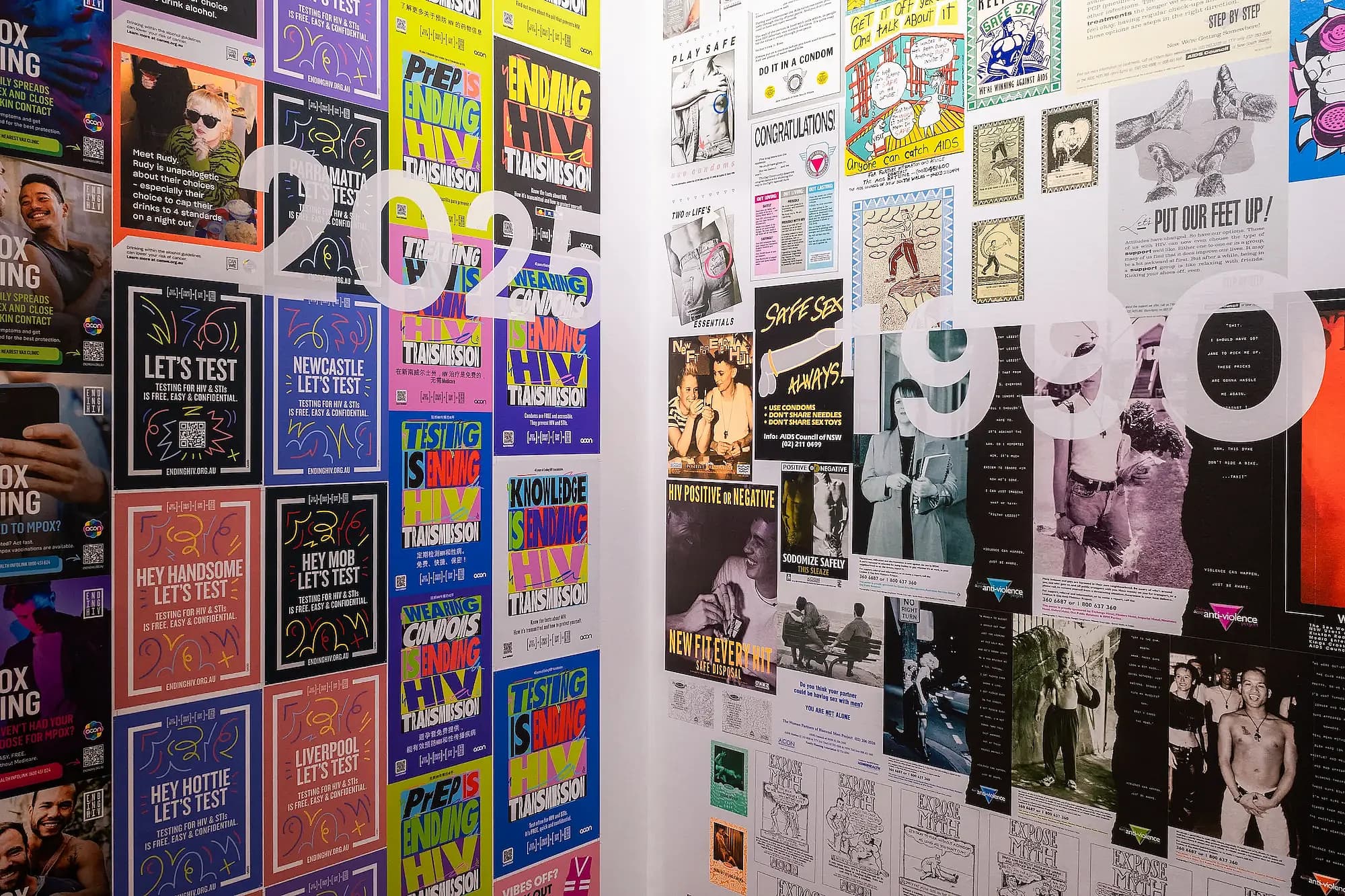
We’re Here for You – 40 Years of ACON is a current exhibition at Qtopia Sydney celebrating four decades of work by ACON, one of Australia’s leading LGBTQIA+ health and advocacy organisations. Established during the HIV/AIDS crisis of the 1980s, ACON has played a central role in health education, harm reduction, community care, and political advocacy.
The exhibition traces ACON’s history through landmark campaigns, community initiatives, and public health responses, documenting how grassroots activism developed into sustained, community-led health infrastructure. Archival material and campaign imagery highlight ACON’s evolving approaches to prevention, inclusion, and wellbeing across generations.
Positioning ACON’s work within broader histories of activism and care, the exhibition acknowledges the labour of communities, volunteers, and health workers who shaped its legacy. 40 Years of ACON recognises past achievements while affirming the organisation’s continuing role in supporting visibility, dignity, and health for LGBTQIA+ communities.
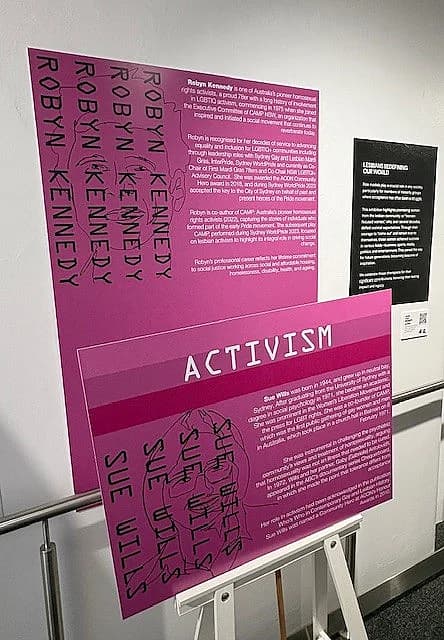
Lesbians Redefining Our World
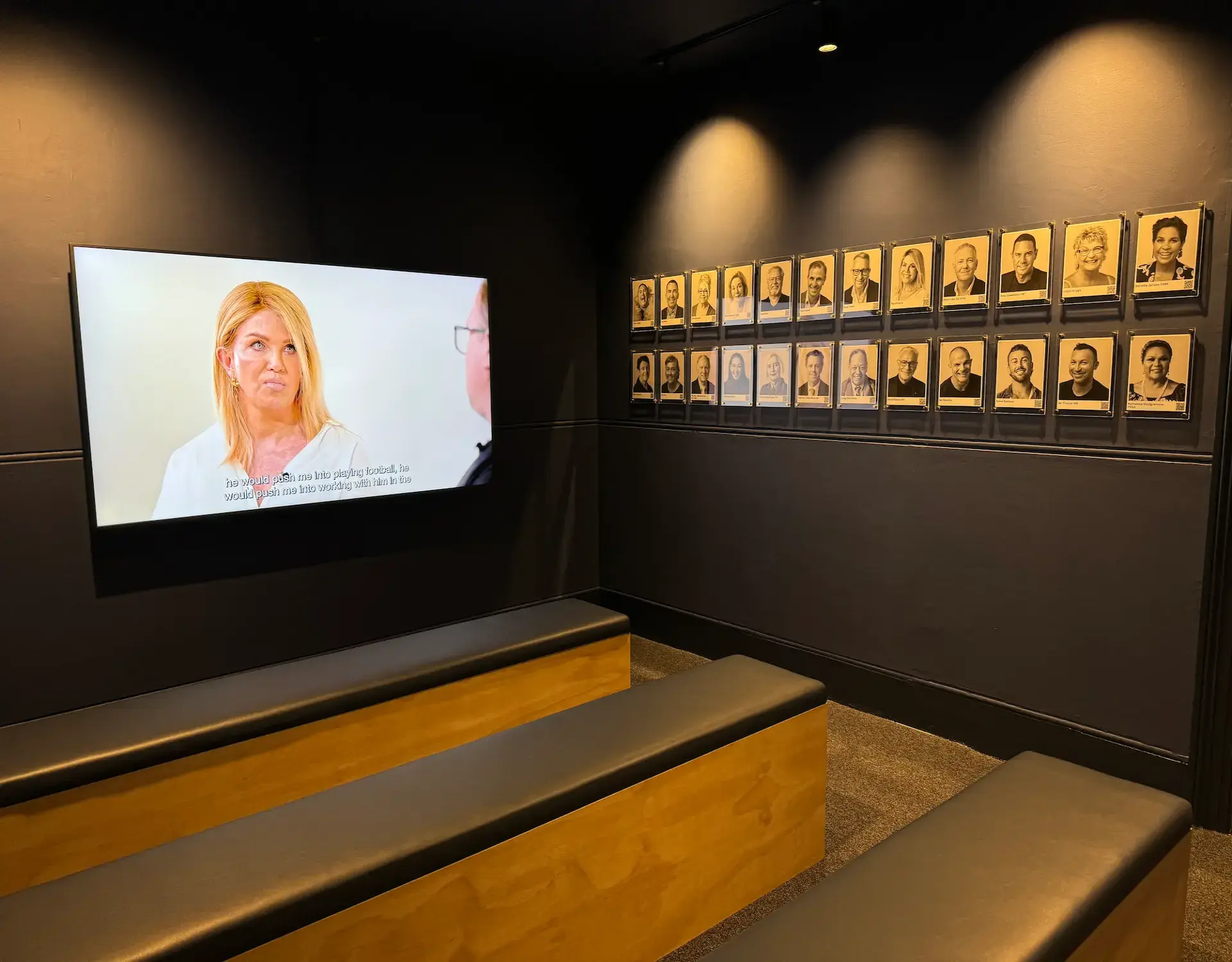
Lesbians Redefining Our World is a current exhibition at Qtopia Sydney examining the importance of visibility, representation, and leadership within lesbian communities. The exhibition centres on the role of public figures as models of possibility, particularly within minority communities where acceptance has historically been contested.
The exhibition presents a selection of lesbian trailblazers whose professional achievements and public lives demonstrate that being openly lesbian has not impeded ambition, influence, or success. Featured figures include Dawn O’Donnell, Deborah Cheetham AO, Kerryn Phelps AM, Miriam Margolyes, Narelda Jacobs OAM, Penny Sharpe, Penny Wong, Robyn Archer AO, Robyn Kennedy, Sam Kerr OAM, and Sue Wills.
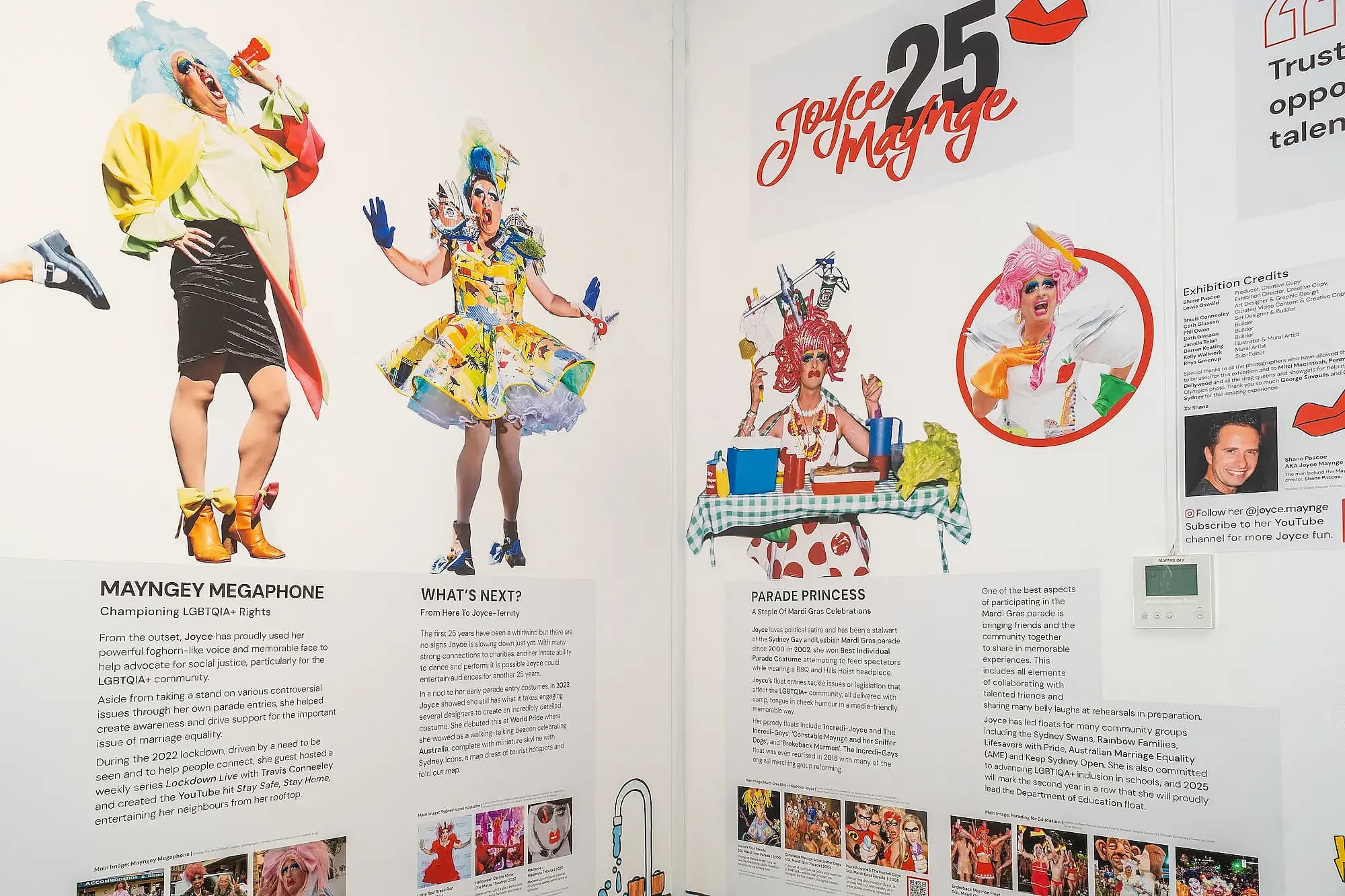
In My Closet: Joyce Maynge 25
Joyce Maynge 25 is a current exhibition celebrating the career and cultural impact of drag artist Joyce Maynge. The exhibition documents Maynge’s practice across performance, community engagement, and LGBTQIA+ visibility, marking her contribution to Sydney’s drag and queer cultural landscape.
The exhibition presents photographic works, personal imagery, and visual documentation of performance, alongside an interactive installation inviting visitor participation through a purpose-built “selfie bed.” Together, these elements reflect the intimacy, humour, and theatricality central to Maynge’s drag persona, while situating her work within broader histories of drag as performance, storytelling, and self-authorship.
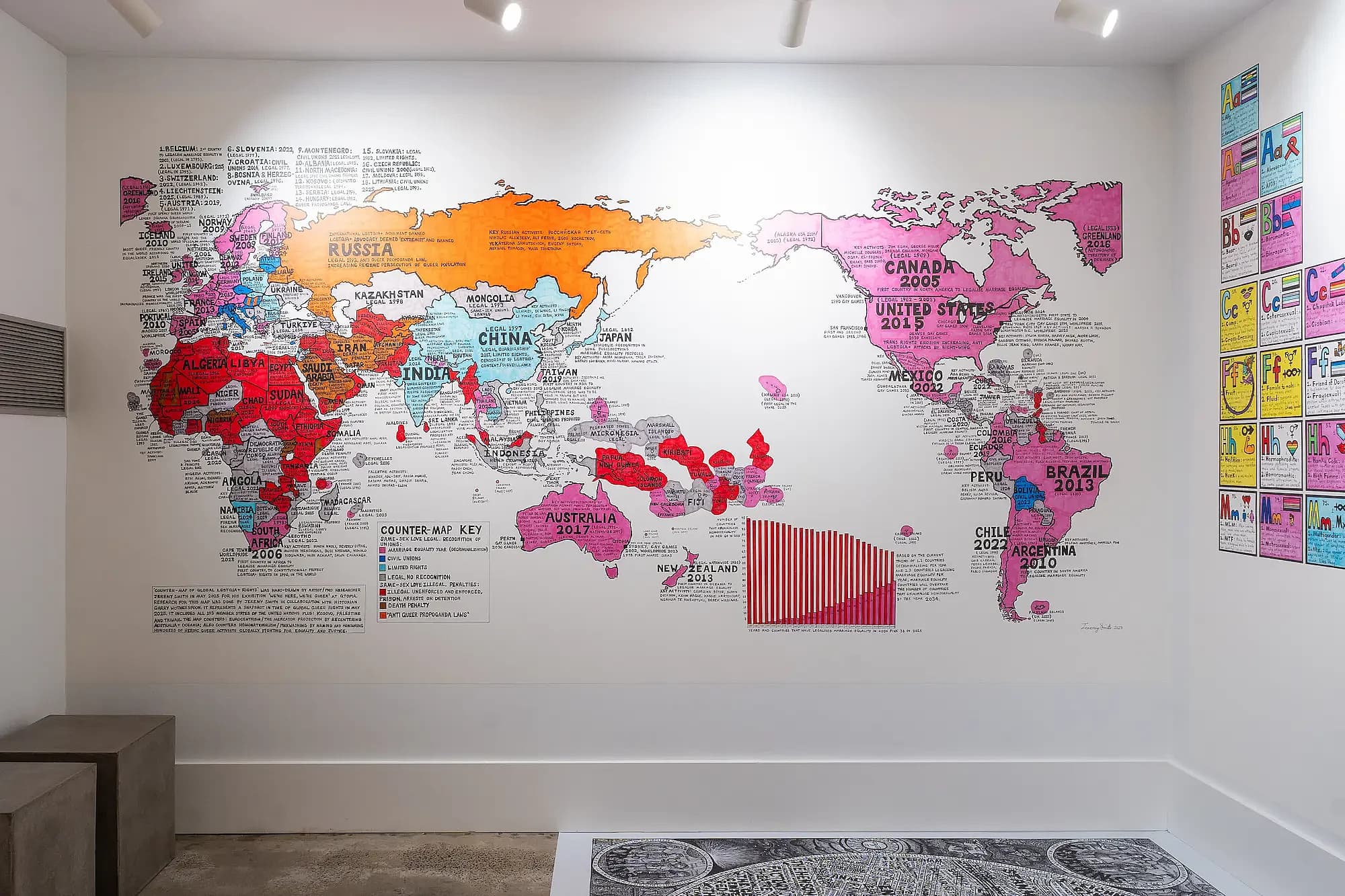
We're Here, We're Queer
We’re Here, We’re Queer is an inaugural exhibition first presented in 2024 and expanded in June 2025, examining LGBTQIA+ pride, place, and culture across Australia and beyond. Through hand-drawn cartography, queer terminology, and bold visual symbolism, the exhibition brings histories often marginalised or erased into public view. Moving between local neighbourhoods and global movements, it frames pride as both a cultural practice and a political assertion of presence.
The exhibition comprises hand-drawn works by artist and curator Jeremy Smith. Works created specifically for the exhibition include Queer Elements: An LGBTQIA+ Periodic Table and Counter-map of Global LGBTQIA+ rights. The original presentation also included Pride Across Australia, a cartogram mapping pride events nationwide, accompanied by an interactive digital map documenting current LGBTQIA+ festivals. In addition, the exhibition incorporates two major drawings from Smith’s PhD research into queer cartography: Sydney: A Queer History and Gaybourhood Bubbles of Sydney.
Collectively, these works position pride as a cartographic and cultural response to historical erasure, asserting visibility through place, language, and community. In 2025, We’re Here, We’re Queer won the Museums & Galleries NSW IMAGinE Awards for Exhibition Projects – Museums & Heritage (Medium Organisations).
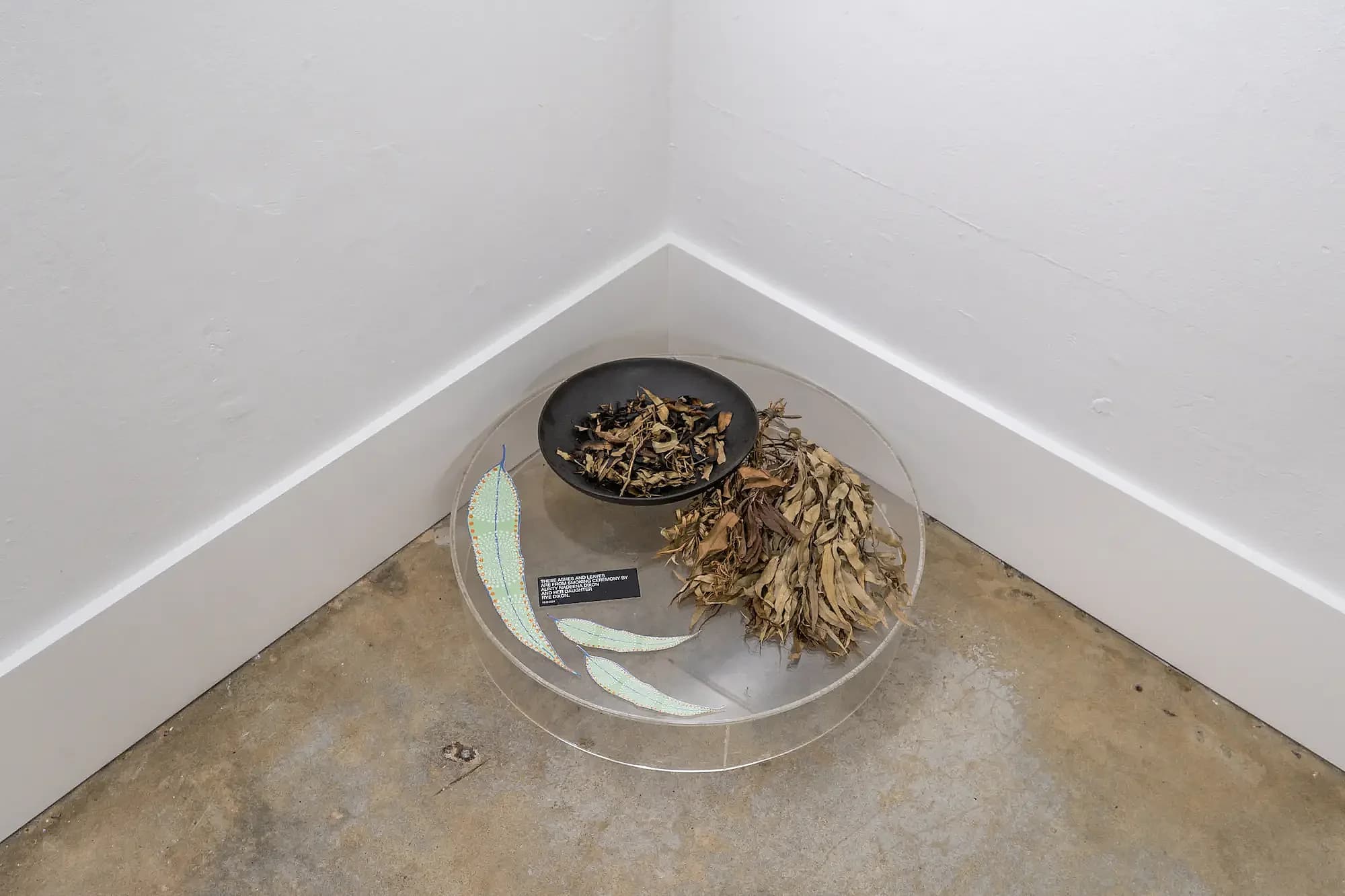
Dirty Words: First Nations Languages
Dirty Words: First Nations Languages is an inaugural exhibition presenting contemporary work by First Nations queer writers whose practices foreground language as a site of culture, resistance, and continuity. Developed during the United Nations Decade of Indigenous Languages (2022–2032), the exhibition situates poetry and spoken language within broader histories of sovereignty, identity, and truth-telling.
The exhibition features works by Jazz Money, Daniel Browning, Natalie Harkin, Blake Griffiths, Raelee Lancaster, and essa may ranapiri. Presented as interconnected works, the texts are positioned in dialogue with one another and with visitors to the space.
Through poetry, sound, and written language, Dirty Words documents the enduring power of First Nations languages as tools of expression, connection, and cultural survival.
Crime To Freedom
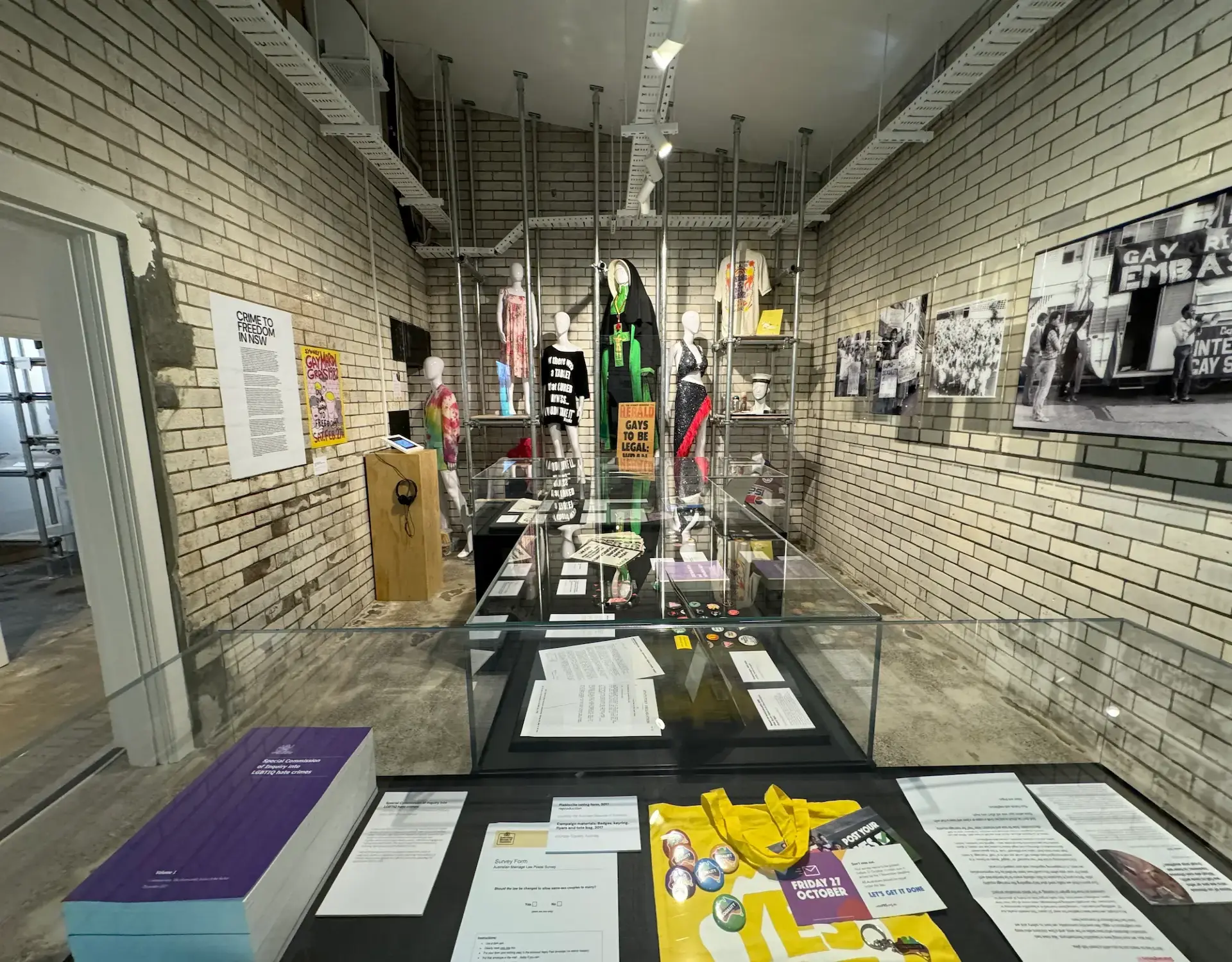
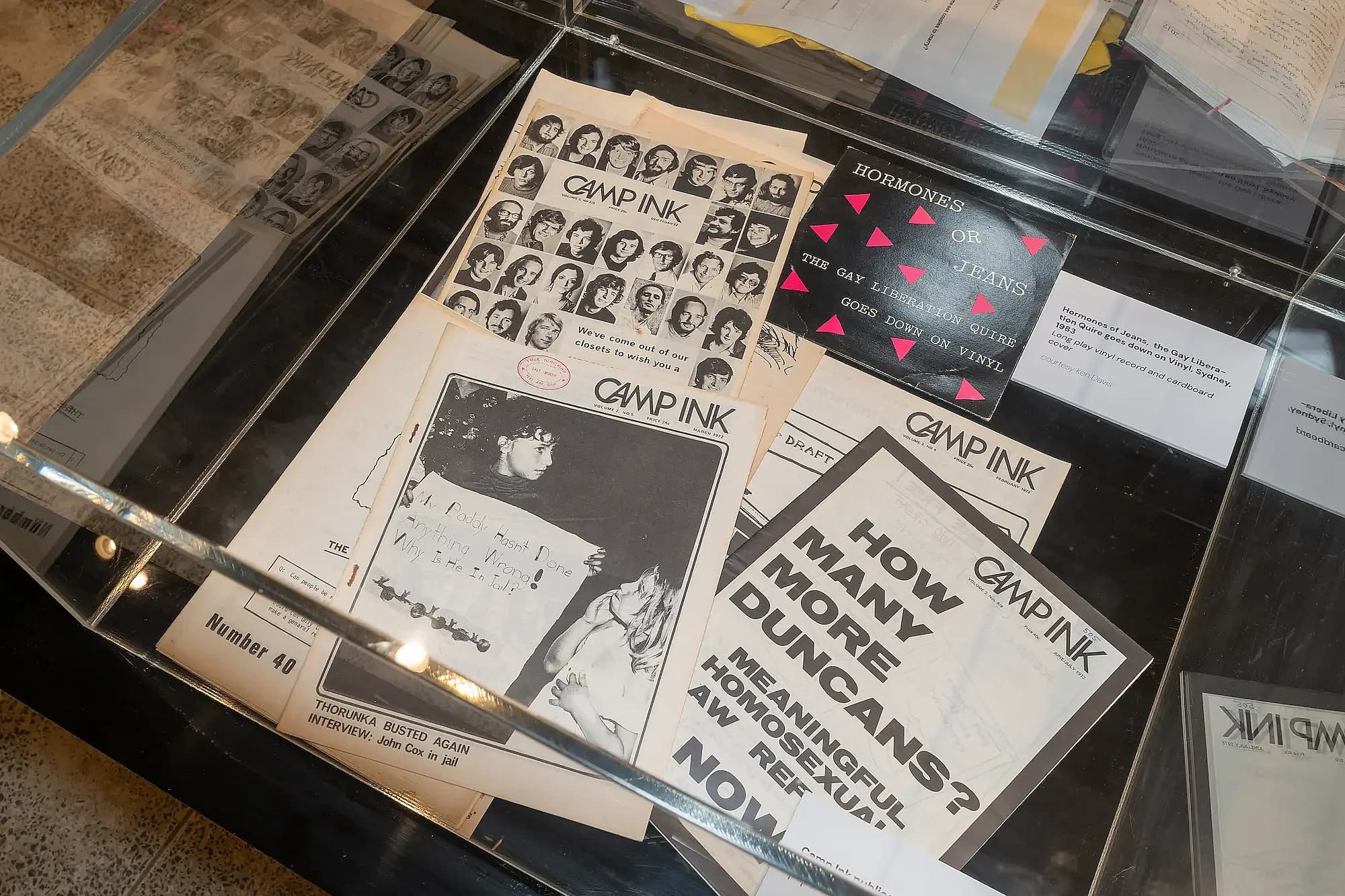
Crime to Freedom is an inaugural exhibition looking at recent LGBTQIA+ history from the 1970s, through decriminalisation to the current day across law, legislation, protest and culture and how that has shaped individual Queer lives.
It is a collection of stories, milestones and artefacts showing the recent history of the path from being criminals to freedom and the pursuit of equality by LGBTQIA+ communities.
Covering topics including adoption, documentation, the non-binding postal plebiscite, advancements for the trans community and the legislative changes that have taken place in recent times, the exhibition traces the activism from the early gay liberation movement in the 1970s, to the conditions which forced the decriminalisation of homosexuality in 1984, as well as the subsequent political, legal, social and cultural shifts for the community.
The Underground
Proudly supported by 357
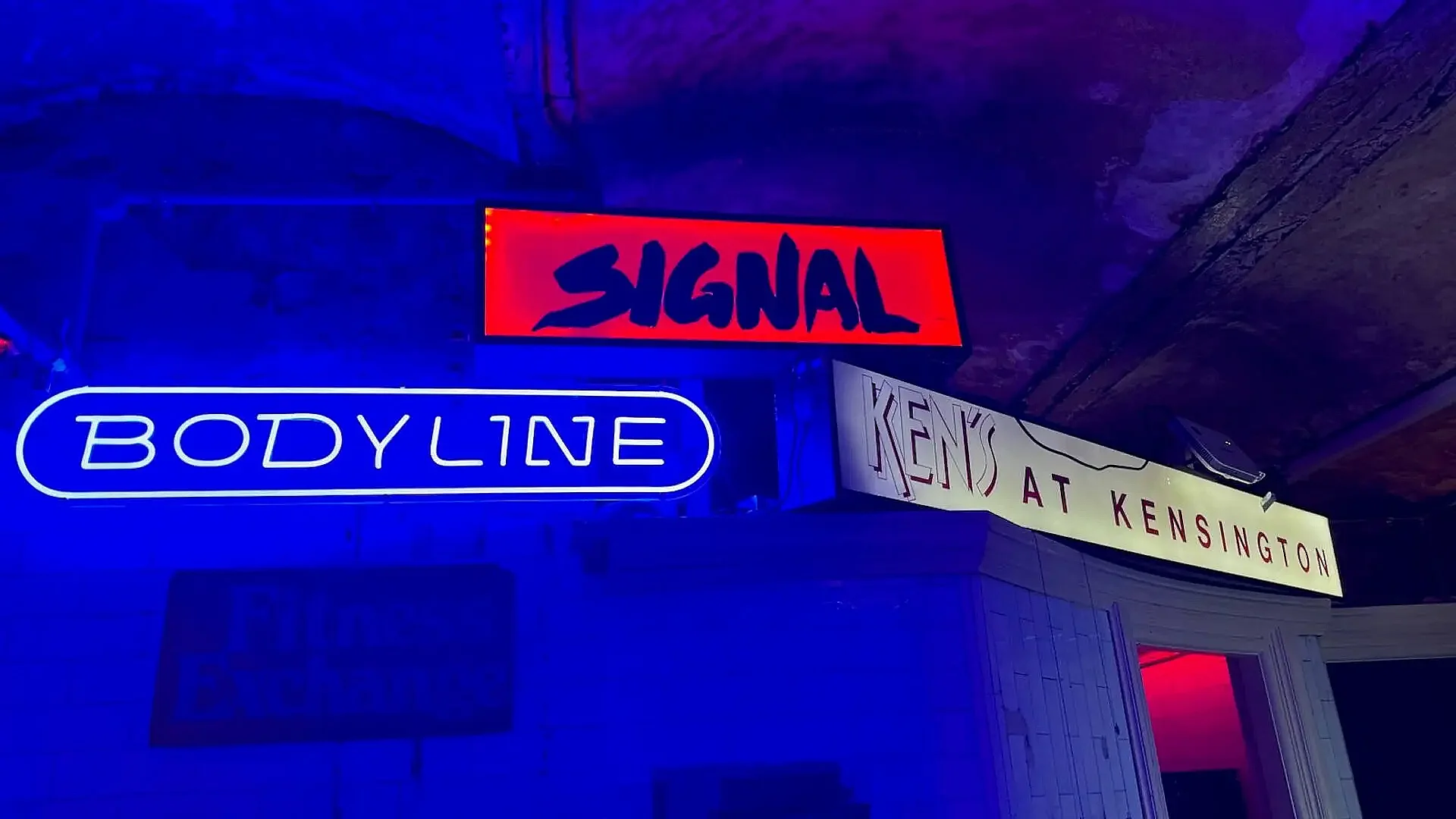
The Underground is a permanent, over-18 exhibition at Qtopia Sydney examining the history of cruising and queer sexual cultures in Sydney during the 1980s and 1990s. Inspired by the former public toilet block at Taylor Square, the exhibition considers public sexual expression as a site of community formation, political resistance, and cultural exchange.
The exhibition documents key meeting places including beats, saunas, and parties, and examines their role in the development of LGBTQIA+ communities, HIV/AIDS education, and struggles for sexual autonomy. Materials are drawn from the Australian Queer Archives and personal collections, and include photographs, posters, and objects associated with Sydney’s sexual subcultures.
In 2024, The Underground received the People’s Choice Award for Best Museum Exhibition at the Time Out Sydney Arts and Culture Awards, and was nominated for the Museums & Galleries NSW IMAGinE Awards in the Exhibition Projects category for medium organisations.
The Apology
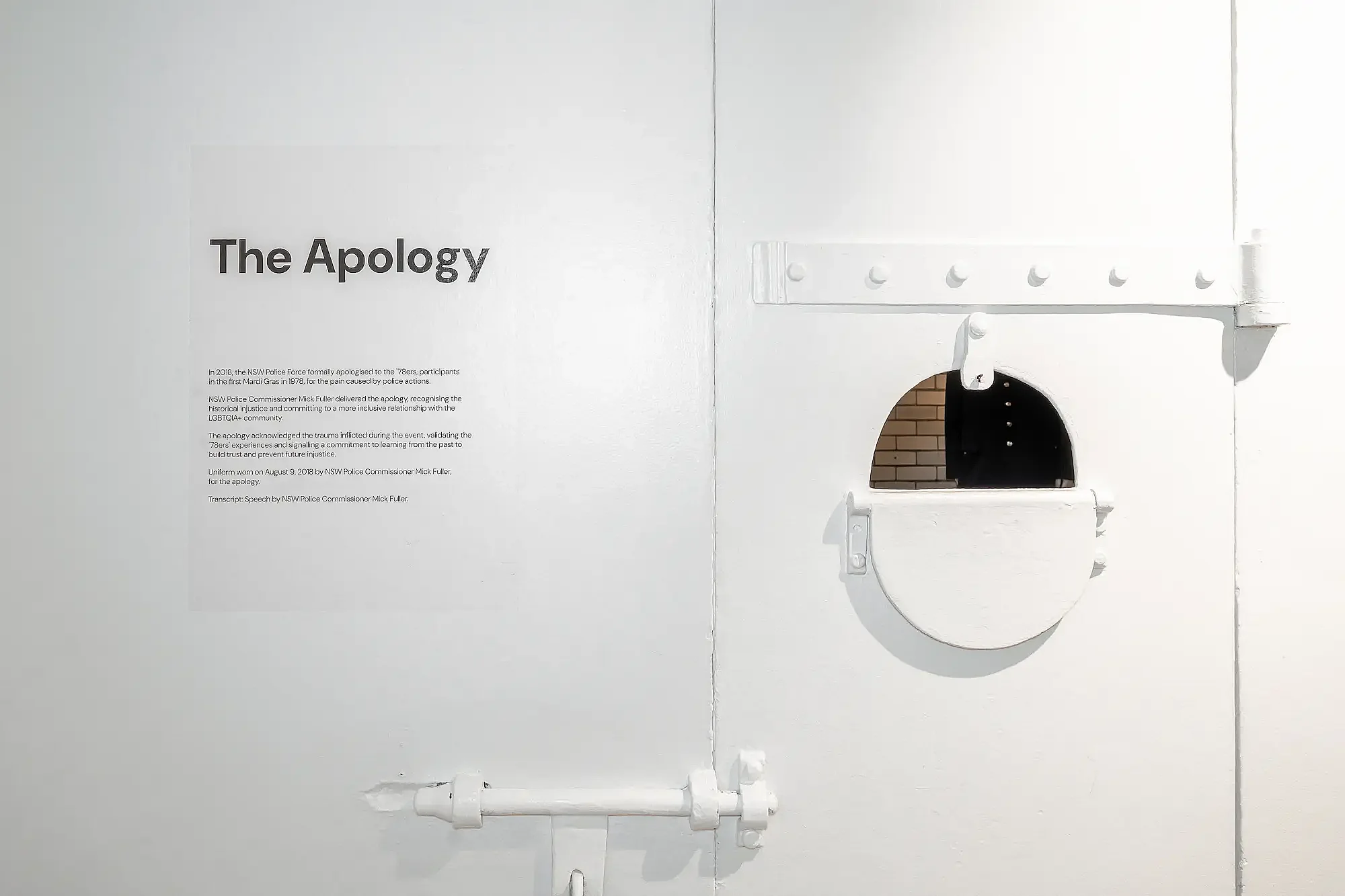
The Apology is a permanent, inaugural exhibition that documents the formal apology delivered in 2018 by the NSW Police Force to the 78ers, participants in the first Sydney Gay and Lesbian Mardi Gras in 1978.
The Apology is a permanent, inaugural exhibition that documents the formal apology delivered in 2018 by the NSW Police Force to the 78ers, participants in the first Sydney Gay and Lesbian Mardi Gras in 1978.
Delivered by Commissioner Mick Fuller AO APM, the apology recognised historical injustice and committed to improved relationships between police and the LGBTQIA+ community.
Installed within an original police cell, the exhibition includes a full-size mannequin wearing an original NSW Police uniform and a projected display of the apology text. The apology acknowledged the trauma inflicted during the event, validating the ’78ers’ experiences and signalling a commitment to learning from the past to build trust and prevent future injustice.
1978: Hour by Hour
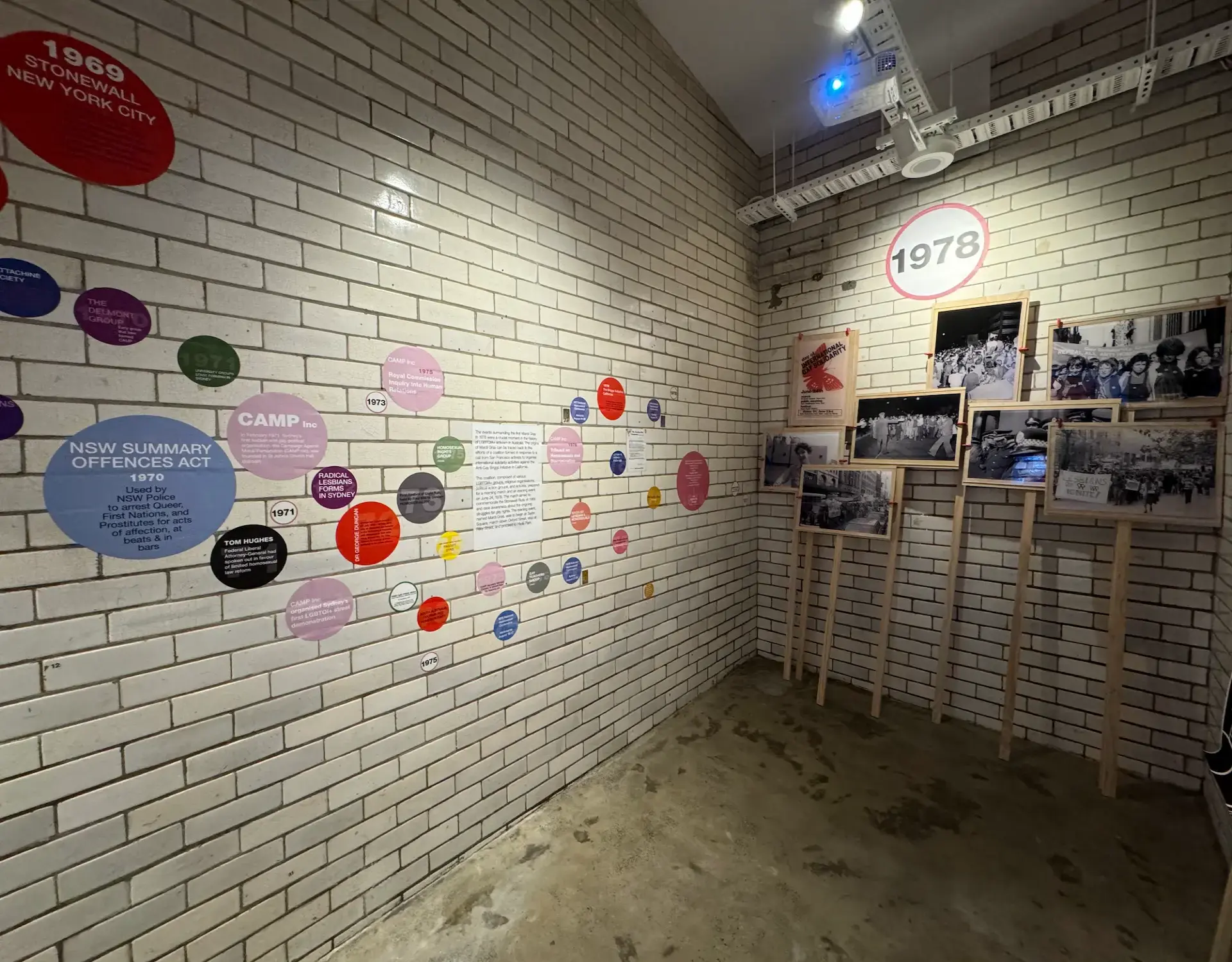
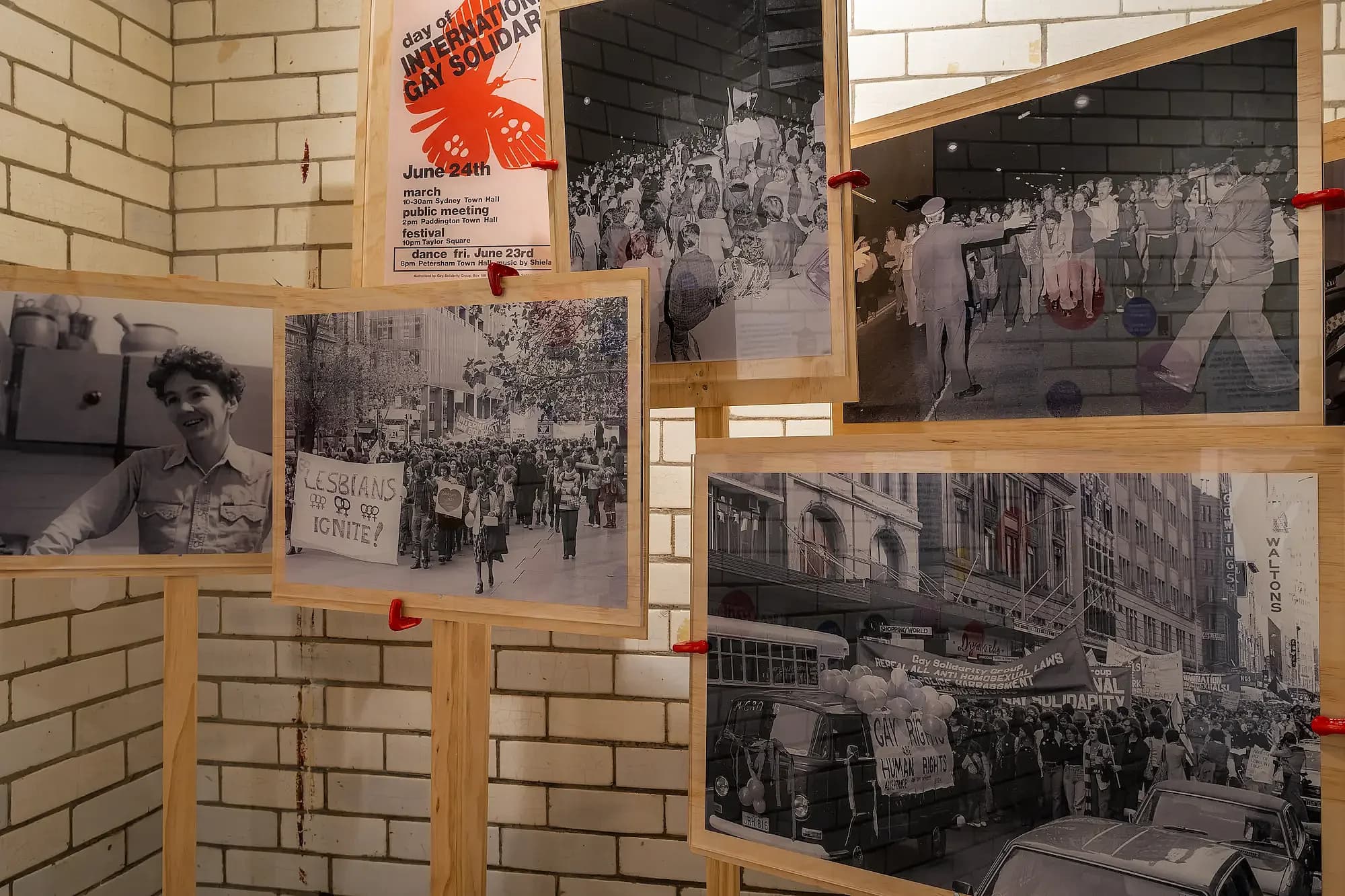
1978: Hour by Hour is a permanent, inaugural exhibition documenting the events of 1978, a pivotal year in Sydney’s LGBTQIA+ history. The exhibition focuses on the formation of the Gay Solidarity Group and the first Sydney Gay and Lesbian Mardi Gras, presenting the events of that year in chronological sequence.
The exhibition examines the protest March of 24 June 1978, subsequent police violence, arrests, and the legal and social consequences that followed in the months after. These events are presented as a defining moment in the development of queer activism and community organisation in Sydney.
Installed within a former police cell, the exhibition includes archival photographs, maps of protest routes, and a recreation of the original International Gay Solidarity Group marching sign by Ken Davis. It also features the documentary Witches and Faggots, Dykes and Poofters, produced by the One in Seven Collective and directed by Digby Duncan. Together, these materials document the events of 1978 and their continuing significance within histories of protest, policing, and LGBTQIA+ rights.
Where We Are
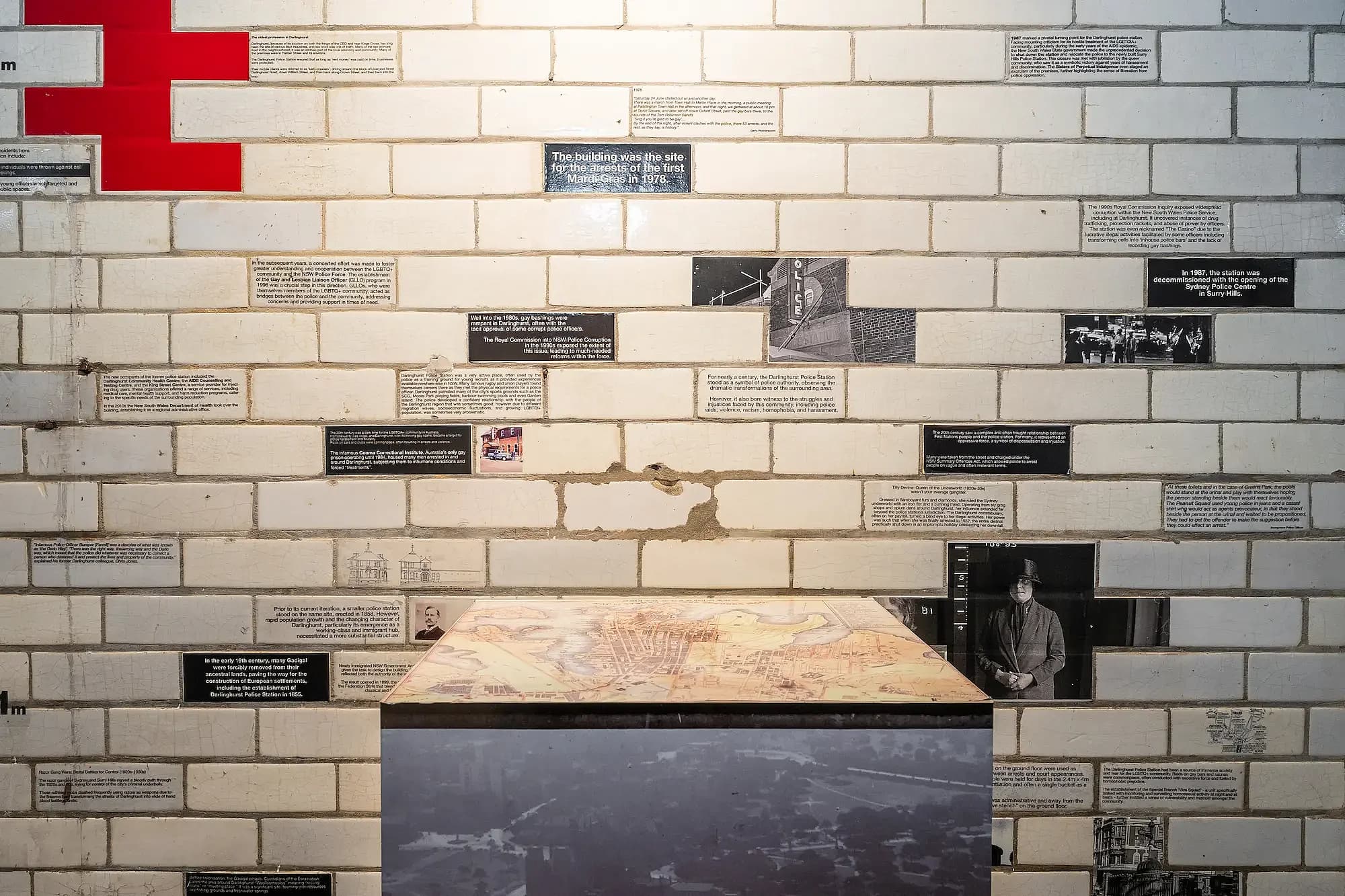
Where We Are is a permanent, inaugural exhibition that examines the site history of the former Darlinghurst Police Station and its changing role within Sydney. The exhibition traces the site from its significance as a meeting place for the Gadigal and Wangal peoples to its development as a centre of colonial authority, including its use as a courthouse, gaol, and police station.
Where We Are is a permanent, inaugural exhibition that examines the site history of the former Darlinghurst Police Station and its changing role within Sydney. The exhibition traces the site from its significance as a meeting place for the Gadigal and Wangal peoples to its development as a centre of colonial authority, including its use as a courthouse, gaol, and police station.
The exhibition documents the building’s role in enforcing laws that criminalised homosexuality, its association with organised crime in the surrounding red-light district, and its decommissioning in the late 1980s. It also records the site’s subsequent transition into a health facility.
Drawing on archival material, photographs and historical maps, Where We Are examines both the building’s past and its transformation into a site for queer history and interpretation. The exhibition situates the former police station within broader histories of law, power, protest, and LGBTQIA+ visibility in Sydney.
HIV Today
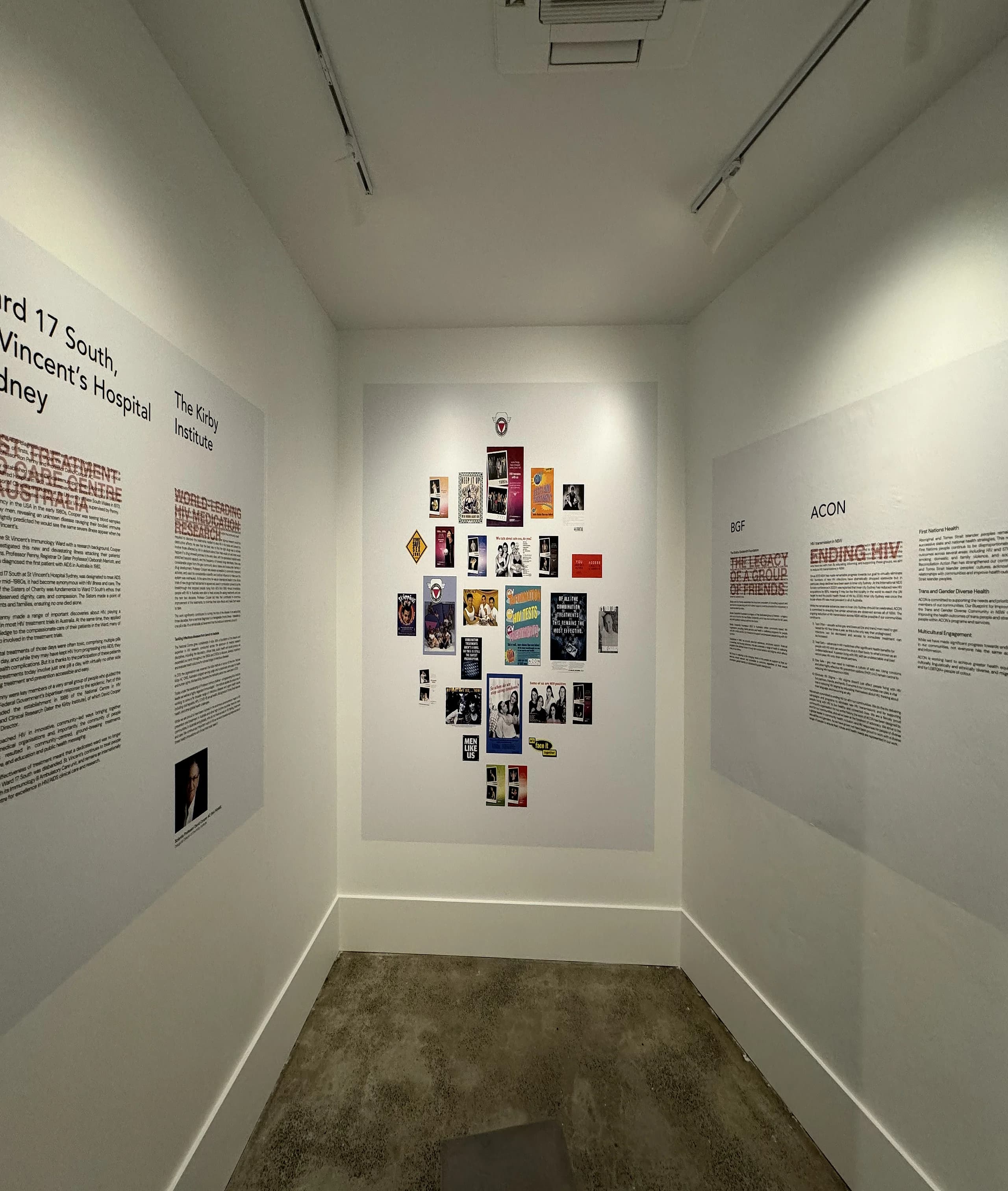
HIV Today is a permanent, inaugural exhibition that presents HIV/AIDS within a contemporary and historical framework. The exhibition examines current understandings of HIV at local, regional, and global levels, situating present-day responses within the longer history of the epidemic.
The exhibition documents the work of key medical, advocacy, and HIV/AIDS support organisations, outlining their roles in treatment, prevention, education, and care. It highlights the ongoing efforts of these organisations in addressing HIV as both a public health and social issue.
While advances in treatment have enabled people living with HIV to lead long and healthy lives in many parts of the world, HIV Today also addresses emerging patterns of vulnerability. It notes recent increases in transmission among certain populations and in regions where infection rates had previously declined, alongside international efforts to eliminate HIV transmission by 2030.
Ward 17 South
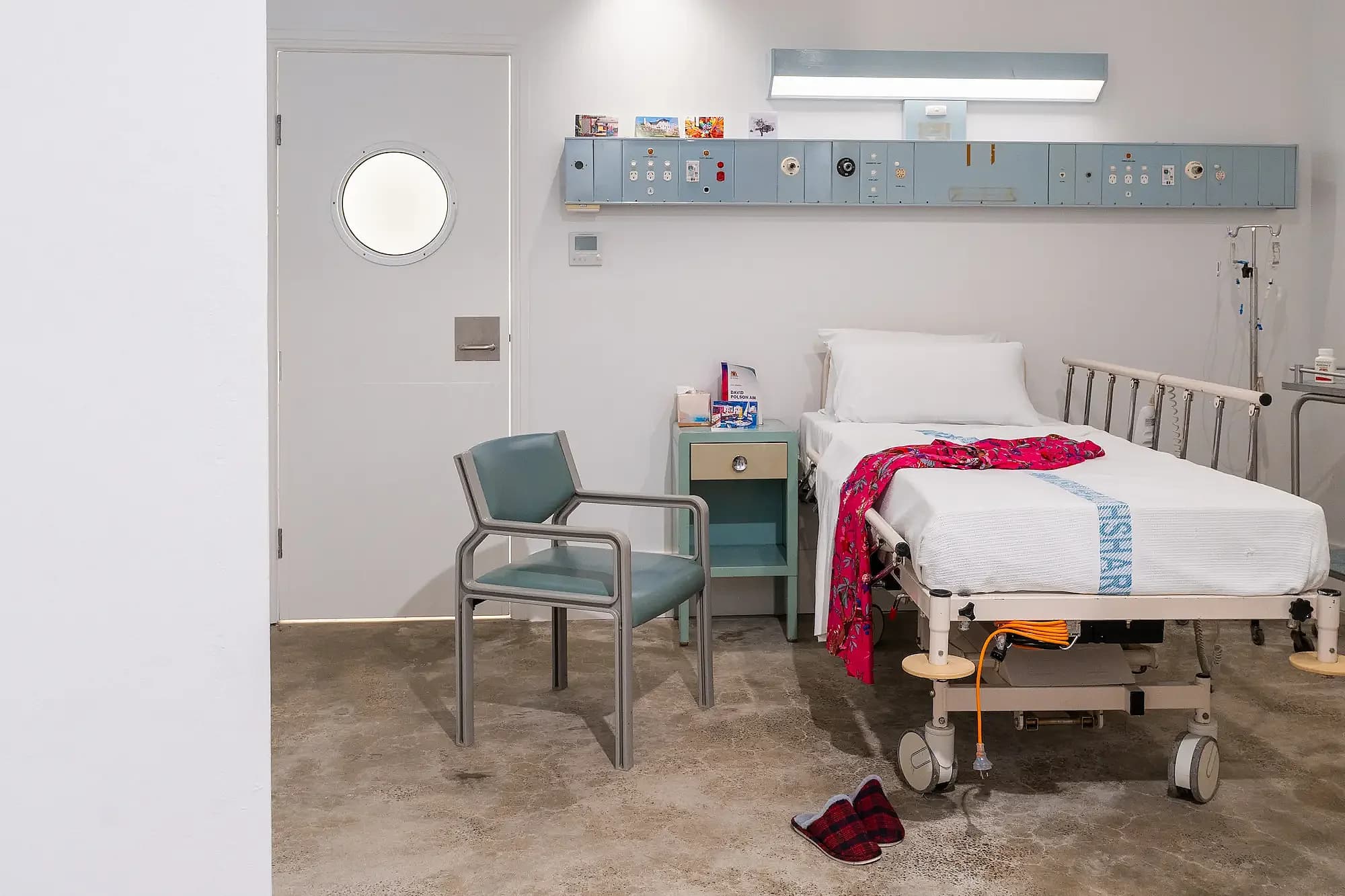
Ward 17 South is presented in partnership with St Vincent’s Hospital Sydney, and reconstructs a room from Australia’s first dedicated HIV/AIDS treatment and care ward. The exhibition was first presented at the National Art School as part of Sydney WorldPride 2023 and was subsequently installed as a permanent, inaugural exhibition at Qtopia Sydney following the museum’s opening in 2024.
Ward 17 South is presented in partnership with St Vincent’s Hospital Sydney, and reconstructs a room from Australia’s first dedicated HIV/AIDS treatment and care ward. The exhibition was first presented at the National Art School as part of Sydney WorldPride 2023 and was subsequently installed as a permanent, inaugural exhibition at Qtopia Sydney following the museum’s opening in 2024.
The exhibition covers the period from Australia’s first AIDS diagnosis in 1982 to the closure of Ward 17 South in 2007. It documents the development of clinical care, community response, and activism associated with the HIV/AIDS epidemic in Sydney during this period.
The exhibition comprises a reconstructed ward environment, including an original hospital bed and room setting, recorded interviews, archival photographs, and original objects from the St Vincent’s Hospital Sydney Collection.